Voluntary Regional Reports Become a Priority of ORU's 2027 Annual Plan
During its latest General Assembly, held on 2 July in the Province of Azuay, Ecuador, the Organization of United Regions (ORU Fogar) approved its Annual Plan for 2027. In this strategic document, the organization established as its highest priority supporting and strengthening the preparation of Voluntary Regional Reviews (VRRs) by all its members, in light of the approaching conclusion of the 2030 Agenda.
To fully understand the significance of this initiative, it is important to recall that the global movement for voluntary reviews formally began in 2018. That year, New York City and three Japanese municipalities presented the first pioneering reports at the United Nations High-level Political Forum (HLPF). Since then, the practice has expanded exponentially, becoming a fundamental tool for regions and intermediate governments to assess their own public policies and progress towards the Sustainable Development Goals (SDGs).
Regional governments are responsible for delivering public services, planning their territories, and managing policies that directly affect citizens' daily lives. For this reason, preparing a voluntary review offers tangible competitive advantages for territories. First, having a rigorous, measurable assessment aligned with international standards facilitates access to national and international cooperation funds and financing opportunities. It also helps attract investors seeking transparency, accountability, and sound regional governance. At the same time, the report serves as a powerful self-assessment instrument, providing technical rigor and institutional consistency to public policies. Ultimately, it strengthens the international positioning of regions within global governance networks.
The experience of several ORU Fogar members that have already undertaken this process demonstrates that preparing a voluntary review can become a genuine catalyst for institutional transformation. A clear example is the Basque Country (Euskadi), which has emerged as one of the leading international references in this field. The Basque Government has used its reviews to achieve international recognition, positioning the region within the UN's global governance framework. This has ensured cross-government policy coherence across its departments while providing an annual mechanism for monitoring progress and ensuring public accountability.
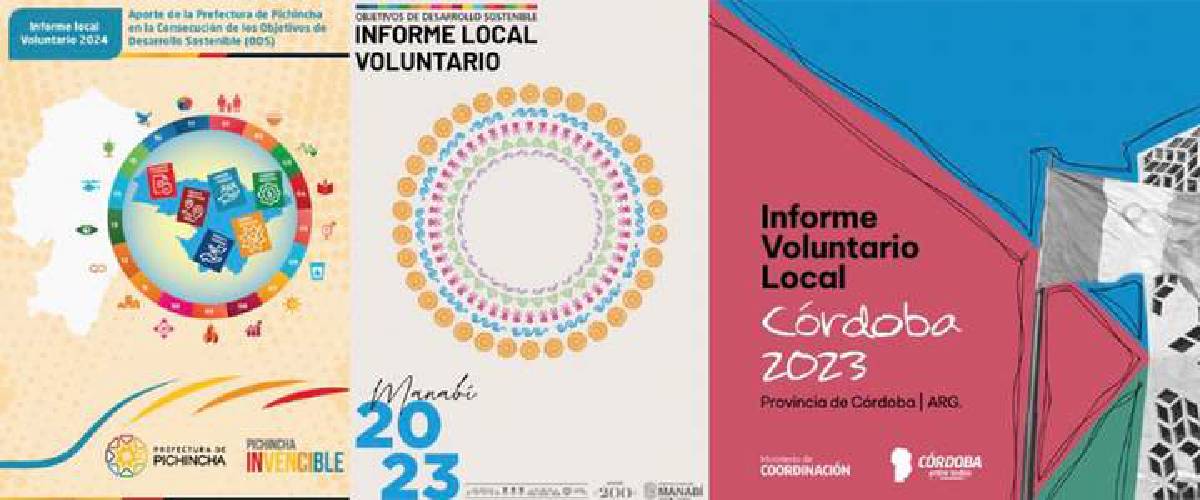
The Argentine Province of Córdoba has likewise used its sustainability reports to structure its medium-term provincial planning. This approach provides the predictability and technical certainty required to attract productive investment and offer legal certainty to international investors. In addition, these reports have served as a bridge for coordinating the efforts of Córdoba's municipalities under a shared strategic framework.
Ecuadorian provinces have also built significant experience in this area. The Provincial Government of Manabí stands out in particular, having prepared its Provincial Voluntary Review with the support of CONGOPE, becoming the first province in Ecuador to do so. This experience has been complemented by initiatives undertaken by the provinces of Azuay, Pichincha, and Imbabura. In each case, voluntary reviews have become a key instrument for demonstrating institutional capacity and technical leadership, opening the door to international cooperation networks while strengthening legitimacy, transparency, and accountability before citizens.
Recognizing that producing these reviews requires a considerable methodological effort and extensive data collection, the ORU Fogar Secretariat will actively support member regions throughout the drafting process. This initiative will rely on the strong commitment and direct involvement of the technical teams of each member region.
This work builds upon ORU Fogar's longstanding partnership with UN-Habitat, which has provided well-established technical support throughout Latin America. Nevertheless, the organization continues to advocate strongly for extending and replicating this same level of sustained technical assistance across the African continent. This request was formally reiterated by the Secretary General during the recent meeting with UN-Habitat Executive Director Anacláudia Rossbach in New York, on the margins of the High-level Political Forum, with the aim of equipping regions with the necessary tools ahead of 2027.