Ukraine’s agglomerations consolidate their role as the country’s backbone
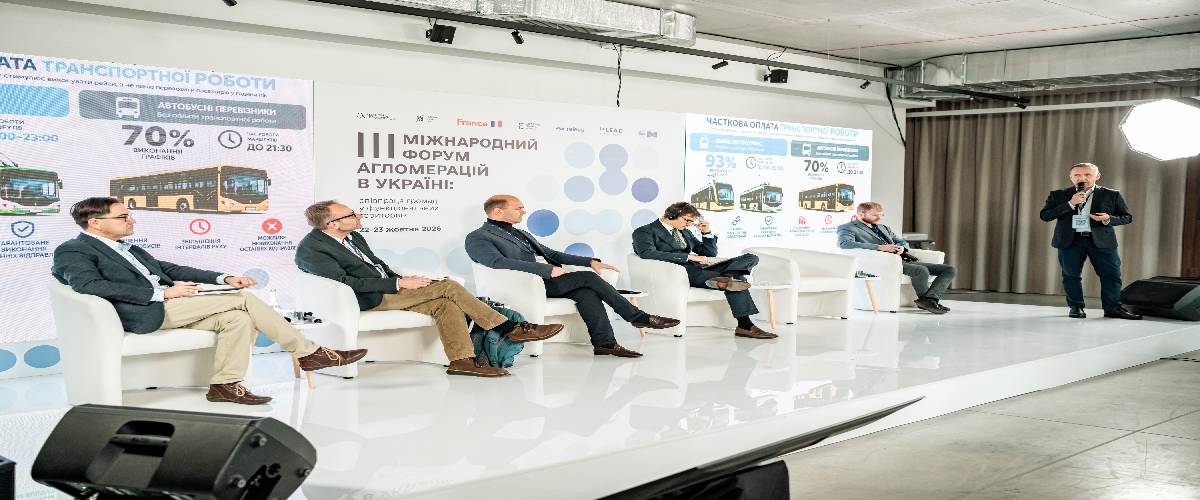
Amid the complex challenges Ukraine is facing, the country’s territorial governance is undergoing an unprecedented structural change. Intermunicipal cooperation and the development of functional metropolitan areas have become the real engine of resilience, social cohesion and the country’s future reconstruction. In this context, the network of Ukrainian urban agglomerations not only brings municipalities together, but is de facto carrying out a functional replacement of traditional regional tasks in day-today management, guaranteeing essential services and the reception of the displaced population.
This territorial leadership was amply demonstrated during the 3rd International Forum of Agglomerations of Ukraine, held on 22 and 23 October under the motto “Cooperation of Communities in Functional Territories”. Organised by “Lviv Agglomeration” and Lviv City Council —with the support of the Congress of Local and Regional Authorities of the Council of Europe and the RELEVE project of Expertise France (U-LEAD with Europe programme)—, the meeting brought together more than 50 experts and local, regional, national and international authorities to discuss mobility, waste management, water resources and resilience.
Ukraine currently has 23 functional urban agglomerations spread across its entire territorial map. Given the saturation or the primarily military focus of the standard regional government structures, these 23 agglomerations have come to take on practical operational planning. Among all of them, the Lviv Agglomeration plays a clear leadership and pioneering role. Having formalised its inter-municipal association as a pioneer in the country, Lviv has not only served as a logistics and reception hub, but is also setting the pace in the articulation of shared public policies. The Forum showed how Lviv’s experience demonstrates that agglomerations do not seek the absorption of small municipalities by the big city, but rather an alliance among equals to share costs and strategic infrastructure.
Throughout the ten working panels, participants analysed how citizens’ everyday lives transcend administrative boundaries and stressed that joint planning of transport, water and waste is indispensable to sustain basic public services. They also underlined the urgency of consolidating a clear regulatory and institutional framework governing the distribution of competences and funding, ensuring that small communities participate on equal terms. Likewise, it was highlighted that coordinated work at the metropolitan scale is key to strengthening local resilience and facilitating the attraction of European reconstruction funds.
To give this meeting maximum visibility, ORU Fogar covered the event on Twitter (X) and on Instagram and Facebook stories, and livestreamed both days on its YouTube channel, where the full videos remain available for viewing at the link for Day 1 and for Day 2.
Links to the livestream of the sessions of the “3rd International Forum of Agglomerations of Ukraine”, available on YouTube:
Day 1: https://www.youtube.com/live/qE4tIUUOd9U?si=MrtqChuNul9AB1-w