President of Dagana, Senegal, assumes the chairmanship of ORU Fogar’s Working Group on Cooperation
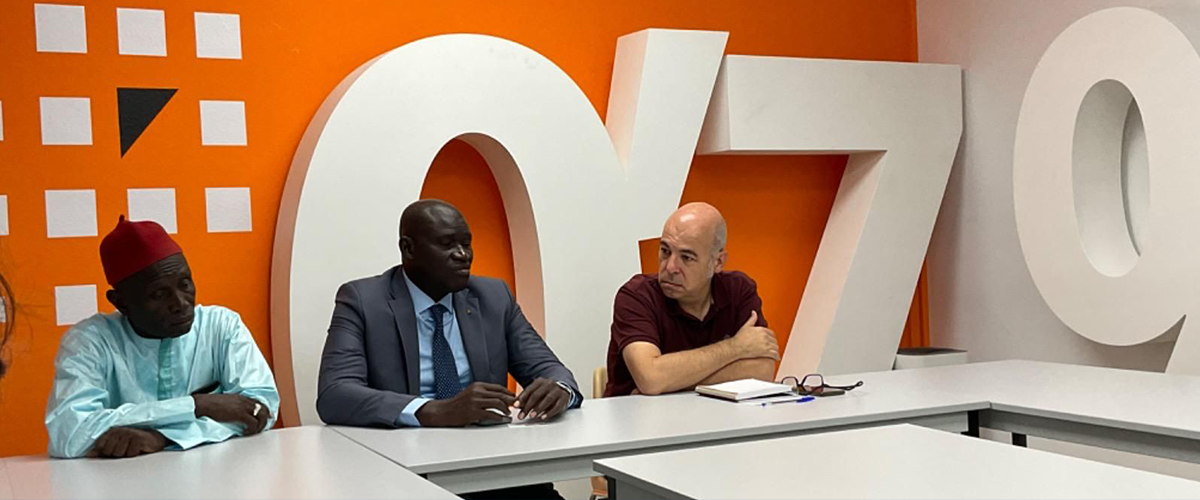
In a strategic move to dynamize the territorial development agenda, ORU Fogar’s Working Group on Development Cooperation has formalized a comprehensive restructuring of its governance. After years of leadership by Catalonia, the group begins a new stage under the presidency of the Department of Dagana (Senegal) and the technical secretariat of the Province of Córdoba (Argentina).
The proposal, presented at the ORU Fogar Bureau held in Arges, Romania, was unanimously approved, consolidating a South-South collaboration axis and a transatlantic alliance of great political significance.
The group’s new president, Ababacar Kalifa Ndao, chairman of Dagana Departmental Council, has established himself as one of the most influential voices of regionalism. And not just because of her management achievements, which have enabled Dagana to secure support from the green Subnational Climate Fund or the donation of buses to improve school transportation in Dagana. Also for a constant and combative presence in the high level forums of the United Nations. Ndao has been a recurring protagonist at the HLPF (High Level Political Forums), where he has defended the importance of regional governments in achieving the 2030 Agenda. Recently, he has represented ORU Fogar at the International Migration Review Forum 26, a United Nations space where migration policies were reviewed and where President de Dagana exposed the problems of his territory which is both of origin but also of passing, of immigration, to claim support for managing these human flows.
The restructuring places the Province of Córdoba as the operating pillar and technical engine of the group. Rodrigo Ceballos, from the Undersecretariat for International Relations of Córdoba, will assume the functions of secretariat and technical support. This election recognizes the highly active role that Córdoba has historically played in the network, contributing its experience in decentralization and its capacity for political articulation to ensure that the group not only discusses but also executes tangible projects.
"This new structure not only reactivates the group, but also balances the balance of power towards a diverse regional leadership, able to talk from you to you with international organizations," said ORU secretary Fogar, Carles Llorens. With this change, ORU Fogar reaffirms its commitment to a more pragmatic decentralized cooperation, where the accumulated experience of Córdoba and the international influence of Dagana promise to revitalize development projects for the regions of the network.