The Living Heartbeat of Manabí, World Region of Gastronomy
Pere Castells
President of the Science and Cooking World Congress Foundation
There are weeks in the calendar that are not measured by the hours that pass, but by the depth of the marks they leave on the memory of peoples. That is what these October 2026 days in Manabí have been. This was neither a far-off conclave nor a cold, distant symposium; it was the vibrant, collective celebration of a province that has embraced its destiny with pride, rightfully establishing itself as a World Region of Gastronomy.
From the very first moment, the Prefecture of Manabí opened its doors and its heart to show the world what it means to inhabit a land where origin is lived as a daily commitment. At the Iche Ecosystem, in San Vicente, and throughout the gatherings that have stirred every corner of the province with enthusiasm, cuisine has revealed itself in its most authentic dimension: not as a mere commercial showcase, but as the refuge of the memory, dignity and affection of its people.
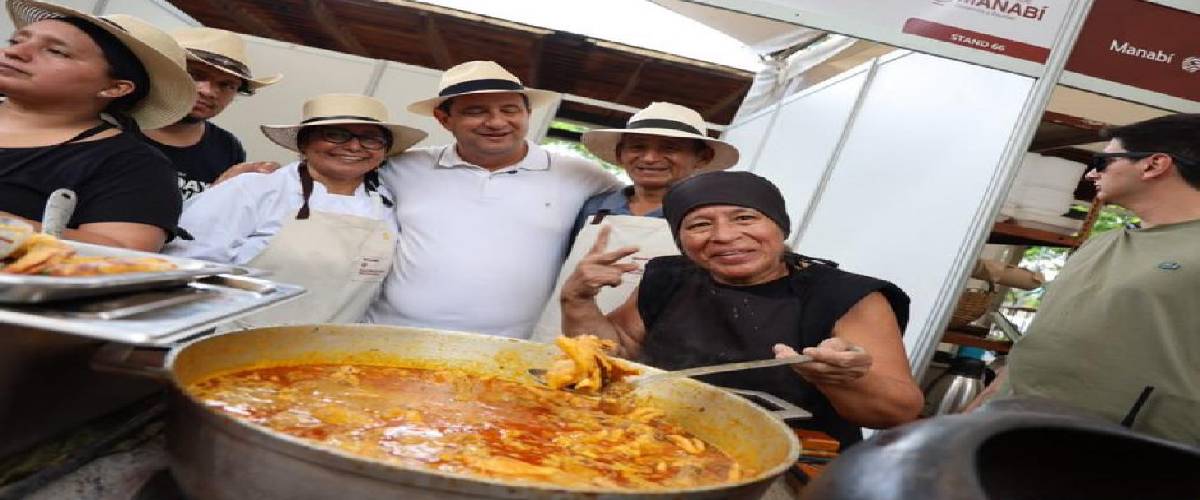
What has happened in Manabí these days is the living testimony of a community transformation. We saw it in the “Saberes y Fogones” workshops in the markets, where the wise hands of the popular women cooks pass down from generation to generation the secrets of a thousand-year-old seasoning; we felt it in the warmth of the traditional Manabí oven, a true masterpiece of folk thermodynamics and clay architecture; and we breathed it in the estuary of Bahía de Caráquez, looking to the future with the presentation of initiatives such as Co-Lab Culinaria and firmly committing to biodiversity, food sovereignty and the protection of our seeds.
The forum hosted major contributions and notable expert voices that enriched the territorial debate. Among them stood out the vision of Pia Sörensen, from Boston, on fermentation as a bridge between science and cooking; Fanny Vergara’s profound reflections on Manabí ancestry and the authorship of those flavors; Tatiana Rodriguez’s perspective on the memory of maize and Andean agrobiodiversity; and the proposals of Lalo Plascencia and Ana Lobato on how research and active listening to communities are the true engines of innovation. Likewise, voices such as that of Luciana Bianchi, from the Galápagos, with her zero waste approach, the contributions of Diego Gutiérrez on the need to turn cooking into research, Lourdes Delgado Farfán’s historical journey through cacao, the technical rigor of Valentina Álvarez analyzing the thermodynamics of the Manabí oven, and the Amazonian wisdom shared by Marta Echavarría and Juan Manuel Arcos, have drawn a choral map of excellence.
In this collective heartbeat, science and the rigor of knowledge have played a fundamental role, intertwining inseparably with tradition. In my talk, and out of deep conviction, I defended the authentic meaning of the encounter between gastronomy and science: it is not about stripping the stoves of their soul, but about applying the analytical gaze, the understanding of processes and culinary science — such as the thermodynamics of the Manabí oven itself or the magic of local products — to explain the why behind ancestral excellence. I argued that science must be placed at the service of the product, of health and of the community, helping to preserve traditional knowledge through rigor and projecting it soundly into the future.
This gathering has been, above all, a triumph for the province and its protagonists. It has shone in the eyes of the award-winning young talents, in the tireless pulse of the local producers and in the heartbeat of a society that has made the campaign “Qué rico es Manabí” its own. The international delegations we have had the privilege of accompanying these days did not come merely to observe, but to learn from a masterclass in resilience, science and hospitality.
Because what Manabí has shown in these October days is that the true wealth of a region lies not only in its products, however exceptional they may be, but in the ability of its people to come together, apply rigorous knowledge and turn their identity into a project of life and of the future. Manabí has taught us once again that when land, science and memory join hands generously, cooking becomes the most beautiful language for nourishing hope and dignifying the world