Democracy, Territory, and Food: A Regional Agenda from Mercosur
Matías Sotomayor
Parlamentario del MERCOSUR
In a world crossed by multiple crises—climatic, economic, social, and geopolitical—food security has once again taken a central place on the global agenda. For South America, the challenge is not just to produce food; the true challenge is to guarantee the human right to food, strengthen our peoples' food sovereignty, and ensure that our production systems contribute to the sustainable development of our territories.
From the Mercosur Parliament, and particularly from the MERCOSUR Parliamentary Front against Hunger, we have been working with a very clear conviction: there can be no strong and sustained democracy if its people are malnourished. The fight against hunger is not just a social policy; it is a basic condition for human dignity, democratic stability, and development with social justice.
Our work is part of a broader strategy driven by the Food and Agriculture Organization of the United Nations (FAO), which for over a decade has promoted the creation of Parliamentary Fronts against Hunger in Latin America and the Caribbean. Through this network, legislators from different countries coordinate initiatives, share best practices, and strengthen legislative frameworks to move toward the effective fulfillment of the right to food.
In this context, the PARLASUR Parliamentary Front against Hunger actively participates in the Ibero-American and Caribbean Parliamentary Alliance for Food and Nutritional Security, a space that promotes cooperation between parliaments to strengthen sustainable, inclusive, and territorially integrated food policies.
One of the main lessons from this work is that food policies can only be effective if they are built from the territory. Speaking of food security means understanding how food is produced, distributed, and consumed in each community, recognizing the strategic role of family farming, regional economies, and those who sustain food production every day.
That is why we insist on the need to territorialize public policies, coordinating the public sector, the private sector, civil society, and academia to build policies that respond to the concrete reality of our communities. To this end, we promote the creation of a Territorial Observatory for Food Security, designed as a space for coordination between institutions, universities, social organizations, and productive actors to strengthen legislative decision-making throughout the region.
South America, and MERCOSUR in particular, is one of the planet's leading food-producing regions. Our countries possess an enormous productive diversity and an extraordinary capacity to produce quality food.
This reality represents a strategic opportunity, but also a global responsibility in a world where millions of people still suffer from hunger.
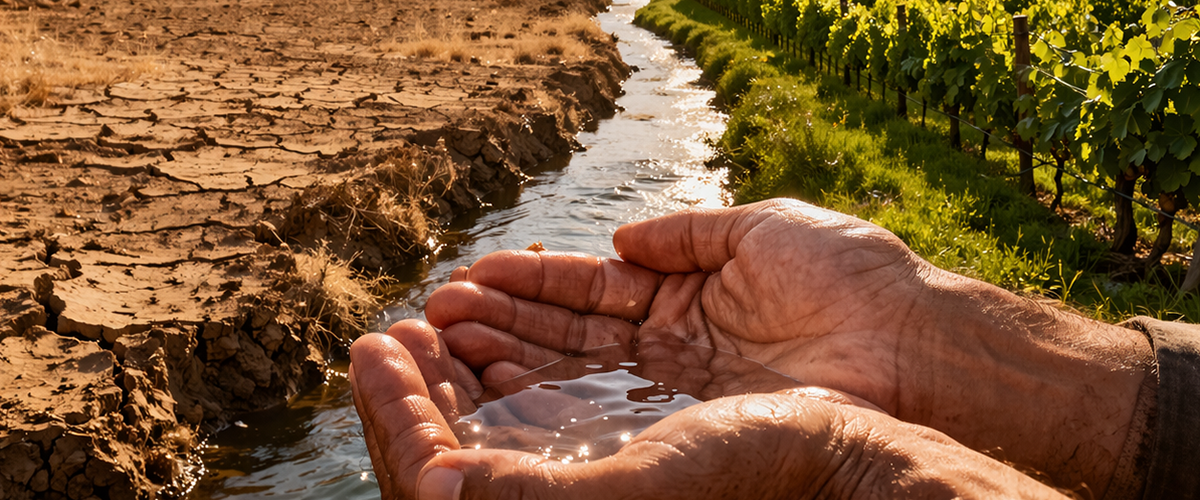
On a personal level, this conviction has very concrete roots. I am from San Juan, an Argentine province that has learned to produce under often adverse conditions, between mountains and deserts, where water is a strategic resource for life and development. In San Juan, our communities have demonstrated for generations that work and knowledge can transform arid lands into productive regions where viticulture, olive production, and various regional economies flourish.
This territorial experience reminds us of something fundamental: food security is not built only with statistics or global speeches. It is built with the daily work of communities, the care of natural resources—especially water—and public policies that support those who produce.
Our peoples no longer expect just diagnoses or promises. They expect decisions and concrete results. As we often say in our region: doing is better than saying, and achieving is better than promising.
In a world marked by uncertainty, guaranteeing the right to food is also a way to strengthen democracy and build social peace. As Pope Francis reminds us, no one is saved alone. Cooperation between peoples, territories, and institutions is the way to build fairer and more sustainable food systems.
Because, ultimately, everything begins with food.